A concert isn't just audio. It's screens, loops, transitions, images that change with every song. And someone has to produce all of that.
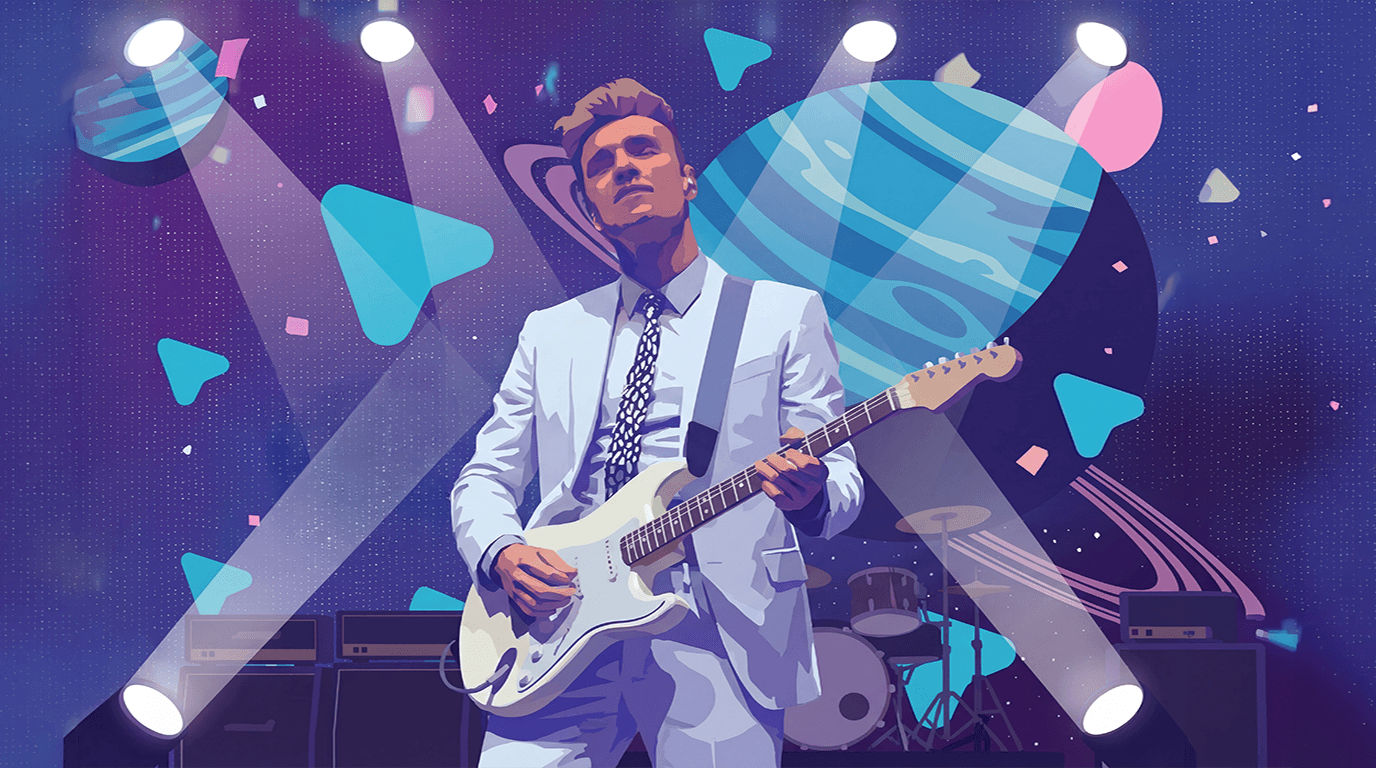
Aren't Lab handled the visuals for Nick Carter's show. The brief: 150 images plus videos, in one week, with a team approving and revising as they went. The kind of project where something usually breaks.
Nothing broke.
The brief was a spreadsheet
Every song had its scenes mapped out. One descriptive sentence per moment. In total, 150 images had to be generated while videos were being assembled in parallel.
The typical bottleneck on these projects is the approval loop. You generate, wait for feedback, fix, wait again. With 150 assets, that loop multiplies by 150.
The workflow that worked
There were reference images for each scene. The first step was converting those references to text — extracting what mattered from each image. Then back to image, but with the style and elements they needed.
Since many scenes shared a style or recurring elements, iteration was fast. One result became the base for the next. Remix on top of remix.
The interesting part was using different models depending on the case. Nano Banana when there was text in the image. GPT Image to nail specific styles. Seedream for scenes that needed realism.
There's no one model that does everything well. But when you can pick the right one for each situation, the result lands faster.
What's changed since then
This project ran in mid-2025. The available models were a lot more limited than today.
Animations were done with Kling 2.0. The images, with regular Nano Banana at low resolution and upscaling after the fact. It worked, but it required extra steps.
Today the same project would be faster. Kling 3 is a massive realism leap over v2. Nano Banana Pro, Flux Max, and GPT Image 1.5 are more efficient models, with better prompt adherence and direct 4K output — no upscaling needed.
The speed at which Dual ships new models is part of the value. What needed workarounds six months ago is direct today. And what needs workarounds today will probably be direct in six months.
The prompt enhancer did the heavy lifting
Every scene had a descriptive sentence in the brief. Those sentences were written for humans, not AI models.
The prompt enhancer turned them into functional prompts. "Nostalgic '90s scene with neon lights" became something the model could actually interpret.
Less time writing prompts, more time picking results.
The collaborative part
With a team approving assets in real time, the shared board became central. Everyone saw the same canvas. Revisions got marked there. Approved assets got separated from the ones that needed another pass.
Without that, the project would've been a nightmare of files in folders, lost versions, and WhatsApps asking "which one was the latest?"
The result
150 images. One week. Videos being assembled in parallel with the assets that got approved.
The person who ran it summed it up like this: "I spent more time choosing the deliverables than getting to the right result."
That's the shift. It's not that AI does the work alone. It's that time moves from production to decision. Fewer hours rendering, more hours curating.
Aren't Lab used Dual to produce the visuals for Nick Carter's show.